
Building the Hospital of Tomorrow: A Journey at Milton Keynes University Hospital
When I arrived at Milton Keynes University Hospital just over eighteen months ago, I wasn’t entirely sure what to expect. At Nottingham University Hospitals, I had been immensely proud of what we achieved with the Living Lab at Linden Lodge—placing staff and patient voices at the heart of design and working hand-in-hand with industry and academia to create solutions that drove meaningful change.
Milton Keynes, however, is different. The technical infrastructure here is remarkable. Under Craig York’s leadership as CIO, MKUH has already transitioned to 85% cloud-based systems and is well on its way to becoming fully paperless, supported by Wi-Fi 6 across the site. The Trust has played a pivotal role in shaping national conversations around digital-first healthcare and has contributed significantly to the evolution of the NHS App, improving patient access and engagement.
I’ll admit, I was a little unsure about where I might fit in. Thankfully, technology never stands still—and the complexity of NHS systems and processes means there are always opportunities to improve. Frontline staff, particularly nurses, are a goldmine of ideas and insight. Yet pressure on resources often leads to silos, making it harder for technology and infrastructure to work hand-in-hand in supporting clinical teams.
Breaking down these barriers is key. By connecting these worlds, we can unlock the full power of data and innovation to create environments that are smarter and more efficient—spaces designed around the needs of patients and staff.
Turning Vision into Reality
One example is our work to reduce hospital-acquired infections. Using real-time location services with ultra-wideband, delivered over Wi-Fi 7, we’ll have the capability to track and respond to infections based on type. The exciting part is where agentic AI comes in. Imagine tracking a respiratory infection, identifying risk factors based on contact time, correlating with air quality data, and automatically adjusting air rotations. Similarly, for gastro infections, we could generate an automated cleaning rota based on risk profiles.
This is the future we’re building—where data, infrastructure, and intelligent systems work together to improve patient care.
Hospitals as Living Ecosystems
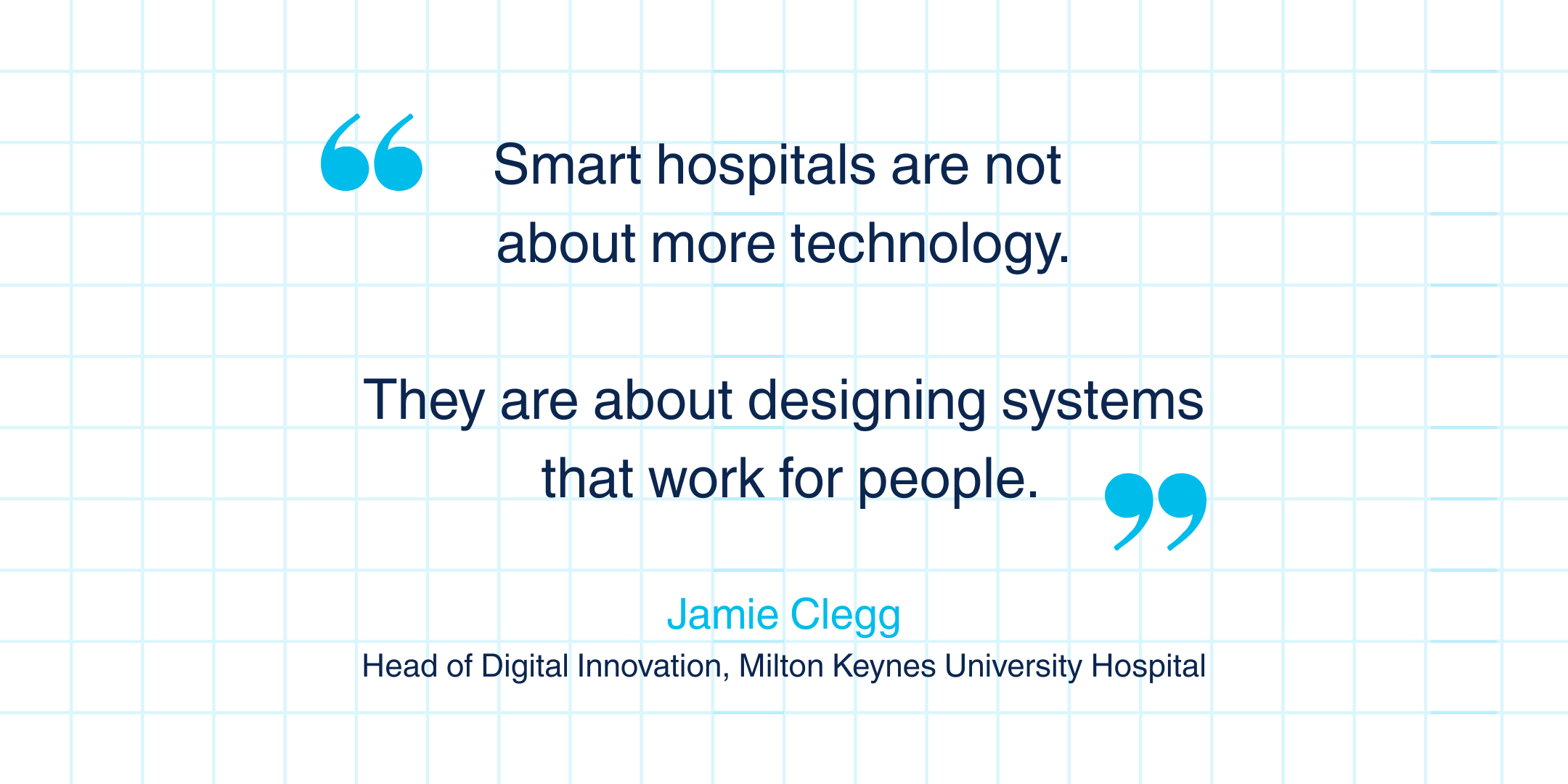
Hospitals are living, breathing places. This mindset, shared by The Lister Alliance, underpins our approach to smart hospitals—not as showcases for the latest gadgets, but as intelligent ecosystems with proactive, integrated infrastructure. The goal is unwavering: better safety, efficiency, and sustainability, leading to improved healthcare outcomes. Achieving this isn’t about technology for technology’s sake; it’s about people, systems, and processes working in harmony.
Co-Design at the Heart
Co-design remains central to this philosophy. Too often, solutions look impressive on paper but falter in practice because they overlook the insights of those on the ground. That’s why we place staff and patient voices at the very heart of the design process. From the outset at MKUH, we’ve brought together representatives from every corner of the hospital—clinical teams, estates, and facilities alike. This isn’t just a technical challenge; it’s about understanding the lived realities of those who deliver and receive care. By involving everyone early, we ensure that the technology we introduce addresses real-world needs, fosters ownership, and drives adoption.
A recent example is our work on single-occupancy paediatric rooms. These spaces offer clear advantages: improved privacy, better infection control, and opportunities for personalised engagement and education through digital tools. They can create calming, therapeutic environments that reduce anxiety and enhance patient experience, while enabling staff to work more efficiently with technologies such as digital twins and smart alerting systems.
However, these benefits come with challenges. Reduced visibility and reduced ambient supervision could pose challenges to safeguarding and increase feelings of isolation. Other considerations include the potential impact on emergency response times and informal observation. Addressing these issues requires a holistic approach—combining robust monitoring technologies, intelligent access control, and comprehensive engagement technologies that improve patient activation and education.
Collaboration and Systems Thinking
Collaboration is equally vital. The journey towards a truly smart hospital is not one we can take alone. Strategic partnerships with NHS Trusts, academic institutions, industry, and infrastructure experts provide the objectivity and rigour needed to generate robust evidence, define success metrics, and inform best practice across the sector. This collaborative, bottom-up model is the foundation of our ambition: to build a digitally enabled smart hospital that empowers patients, supports sustainability, and enables staff to focus on what matters most—delivering high-quality, patient-centred care.
As with previous examples, a systems approach is essential. The complexity of modern healthcare environments cannot be solved by isolated tools or standalone systems. At Milton Keynes, we’re consolidating systems to create a simple, robust architecture—one that’s easier to operate and more resilient to cyber threats. By building on existing infrastructure and leveraging technologies like Wi-Fi 7, OpenRoaming, and Power-over-Ethernet, we’re laying the foundations for solutions that deliver real benefits, from infection control to energy efficiency.
The Digital Front Door
A final example is our digital front door. Our aim is to take the experience to the patient. Using OpenRoaming, we plan to authenticate patients via the NHS App, enabling seamless check-in, wayfinding, and real-time notifications—without the need for terminals or physical screens.
For staff, this means immediate visibility of patient arrivals, improved communication around waiting times, and automated alerts when appointments are due. It will significantly reduce time spent locating patients, particularly in areas with fragmented waiting spaces, and create a smoother, more connected experience for everyone.
The Power of Incremental Change
Ultimately, the power of incremental change should not be underestimated. Small improvements—like smoother access to room occupancy data or smarter wayfinding—add up over time, reducing daily frustrations and freeing up staff to focus on care. By keeping disruption minimal and benefits tangible, we’re creating a health service that’s more flexible, resilient, and able to deliver for patients and staff alike.
Looking Ahead
I feel genuinely privileged to be in this role and excited by the chance to work alongside such talented colleagues here at MKUH. Together, with our partners in industry and academia, we have a unique opportunity to turn our vision of the hospital of tomorrow into a reality—bringing innovation that truly makes a difference for patients and staff alike.