
See one, do one, teach one: what healthcare can learn from smart buildings in other sectors

Ideal is a UK-based Cisco Systems Integrator specialising in smart buildings. We have been named Cisco UK&I Smart Building/Venue Partner of the Year for the past two years, and have delivered 47 smart buildings, including some of the UK’s most iconic construction projects, over 11 years.
Starting with a project at Twickenham Stadium, we’ve seen smart buildings quietly evolve from basic HVAC integration to fully integrated building estates and IT ecosystems, largely honed across commercial buildings and public venues. Meanwhile, healthcare has been placed under increasing pressure to deliver better patient outcomes, improve staff wellbeing and operate more sustainable estates with an ever-decreasing circle of resources.
While the concepts may feel new, the technologies and processes behind them are often not. There are certainly lessons to be learned. If one is to see further than others, it’s by standing on the shoulders of smart buildings. The task needn’t be to invent new solutions, but to de-risk the undertaking by applying proven ones in ways that support clinical priorities…
Elevating the Experience
Let’s start at Co-Op Live in Manchester. It routinely has 23,000 people moving through complex, densely-packed spaces who demand properly designed high-density WiFi, and when connectivity fails, they vote with their feet. At a luxury fashion brand in London, our smart building is designed specifically to support customer devices alongside (but securely separate from) IoT/OT devices. Customers use location/wayfinding to get around the store, and wirelessly access AI systems to virtually ‘try on’ clothing with personal shoppers.
What’s the experience at a hospital, though? It’s not somewhere people really want to be (it’s stressful at the best of times), so making the experience as comfortable as possible is paramount. Patients try to access media services via a high-speed, low-latency WiFi 7 network alongside a multitude of building and medical devices. It’s a very typical setup: a shared landlord network (the hospital), to which tenants (patients) require access whilst maintaining strict, compliant separation of their own sensitive data (EPR).
Designing infrastructure allowing all of this to coexist securely internally, whilst being able to securely share appropriate data to different external platforms, is not a new problem — it has long been solved in other sectors.
Managing Public Safety
Footfall has been used for many years in global retail customers to optimise store layout, influence where products are placed and how space is sold to leading brands. It’s the lifeblood of their multi-million-dollar business. Occupancy data dictates shop floor space, directly relevant to business rates. In a hospital, the same technology shows where the public congregate, signage may be best deployed, and underutilised rooms or areas on a hospital campus can be closed, or at least powered down to manage cost.
At Co-Op Live, location analytics provide visibility into how crowds move through the venue, with door access control preventing the public from accessing areas they shouldn’t. By proactively identifying bottlenecks in flow and capacity levels in dwell spaces, the client can quickly identify hotspots and pre-emptively spot an emergency in the making. To manage an emergency should it occur, digital wayfinding can direct the flow of people to the appropriate exit, and counting footfall above entrances and exits ensures everyone who entered the building exits it in an emergency. It’s a large campus with thousands of public users, using technology to ensure their safety in critical scenarios.
From safer workers to speedier discharge
Smart technologies in many of our buildings are routinely used to ensure worker safety, especially in the case of lone working in plant rooms. Staff badges and RTLS are used in shift adherence and location tracking, and environmental sensors ensure working areas remain within safe temperature, air quality and acoustic levels. CCTV analytics can alert if a worker has fallen, if a fire is in the process of breaking out, or if personal protective equipment is not being worn.
Rather than staff badge tracking, think medical devices or nurse badges, telling you if a patient has wandered off, or has been in the bathroom for a long time and may need assistance, then directing the nearest nurse. Noise-level monitoring identifies not necessarily harmful noise levels but calm, quiet, comfortable spaces to support patient recovery. Motion sensors notify of falls, or in the case of single-occupancy rooms, a patient trying to get out of bed, allowing nurses to prevent the fall in the first place.
Strong foundations make strong (smart) buildings
While these examples span industries and use cases, they all have one common dependency, which is a core tenet of hospital 2.0: robust digital infrastructure as the foundation. Sensors, analytics and building systems only deliver value when supported by well-designed infrastructure. In all of our smart buildings, without exception, the converged network is designed from the outset to support current and future workflows.
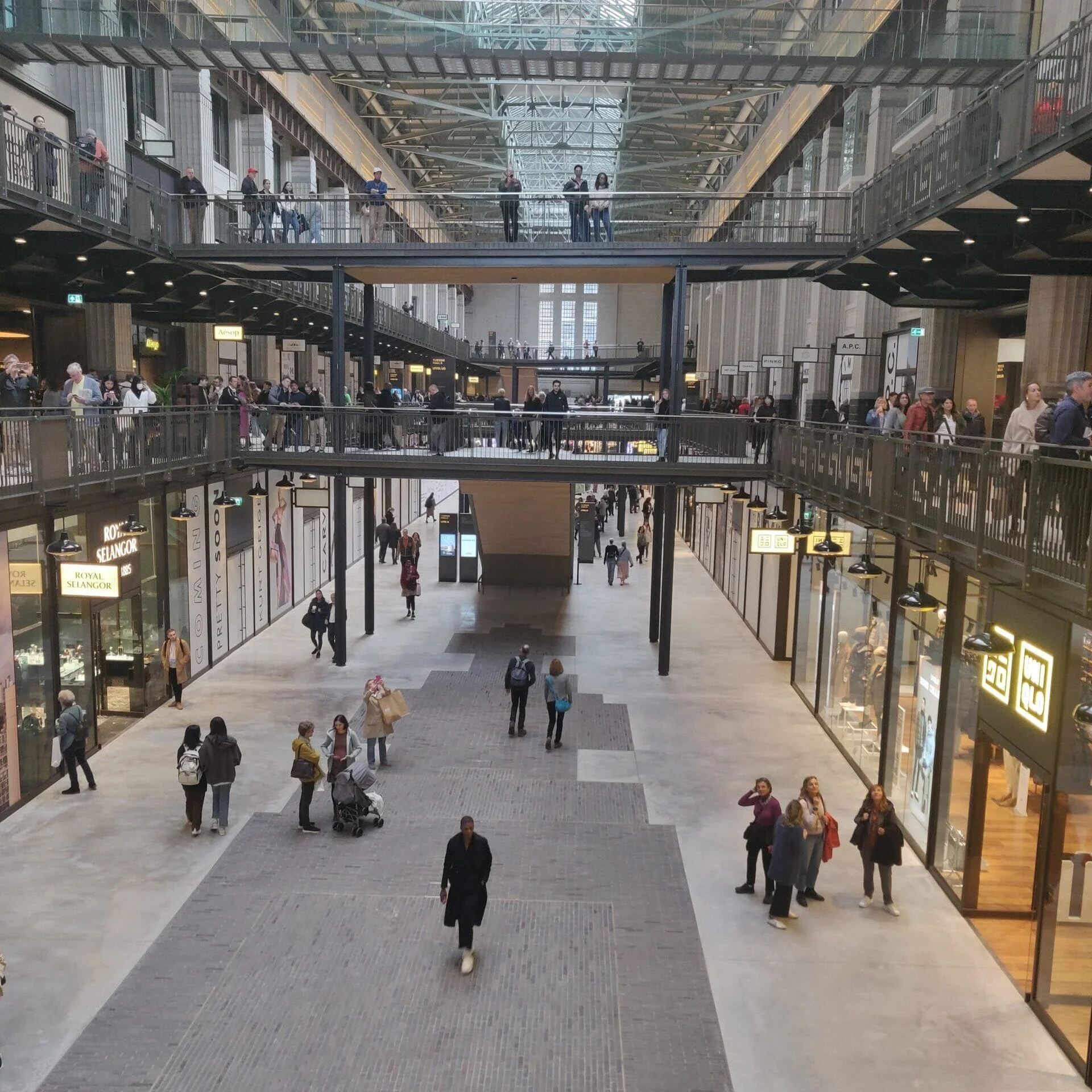
Crucially, and this sounds obvious but… this all begins with an understanding of ‘what, why and how’ in current and future workflows. That insight is translated into foundational infrastructure that can evolve and be delivered in collaboration with a broad ecosystem of partners. Increasingly, we’re seeing these technologies deployed across multi-use commercial environments, like Battersea Power Station, which blends retail, events, and specialist services into a single multi-building campus. A concept transferable to a hospital: safety, comfort and coordination maintained across diverse spaces simultaneously serving very different, but equally important purposes.
The measure of intelligence is the ability to change
During large construction projects, organisations often choose to value-engineer certain technologies out to manage cost and risk. That’s fine, everybody does it. The key is ensuring that digital infrastructure is designed with future capability in mind, allowing technologies to be introduced later without disruption.
In this sense, smart buildings are defined not by the technologies installed, but by the flexibility to evolve. This approach, adopted at 150 Holborn in London, has allowed the client to gather data to make an informed commercial decision on the introduction of automated window blinds.
The smart hospital is not simply about deploying new technologies within healthcare buildings. It’s about learning from environments where similar challenges have already been addressed, often quietly, and over many years. Healthcare has the opportunity to benefit from that experience, and in doing so, ensure that hospital 2.0 is not only intelligent but de-risked, resilient and ready for whatever comes next.
Find out more about Ideal here.