What did it take to build the UK’s first National Rehabilitation Centre?
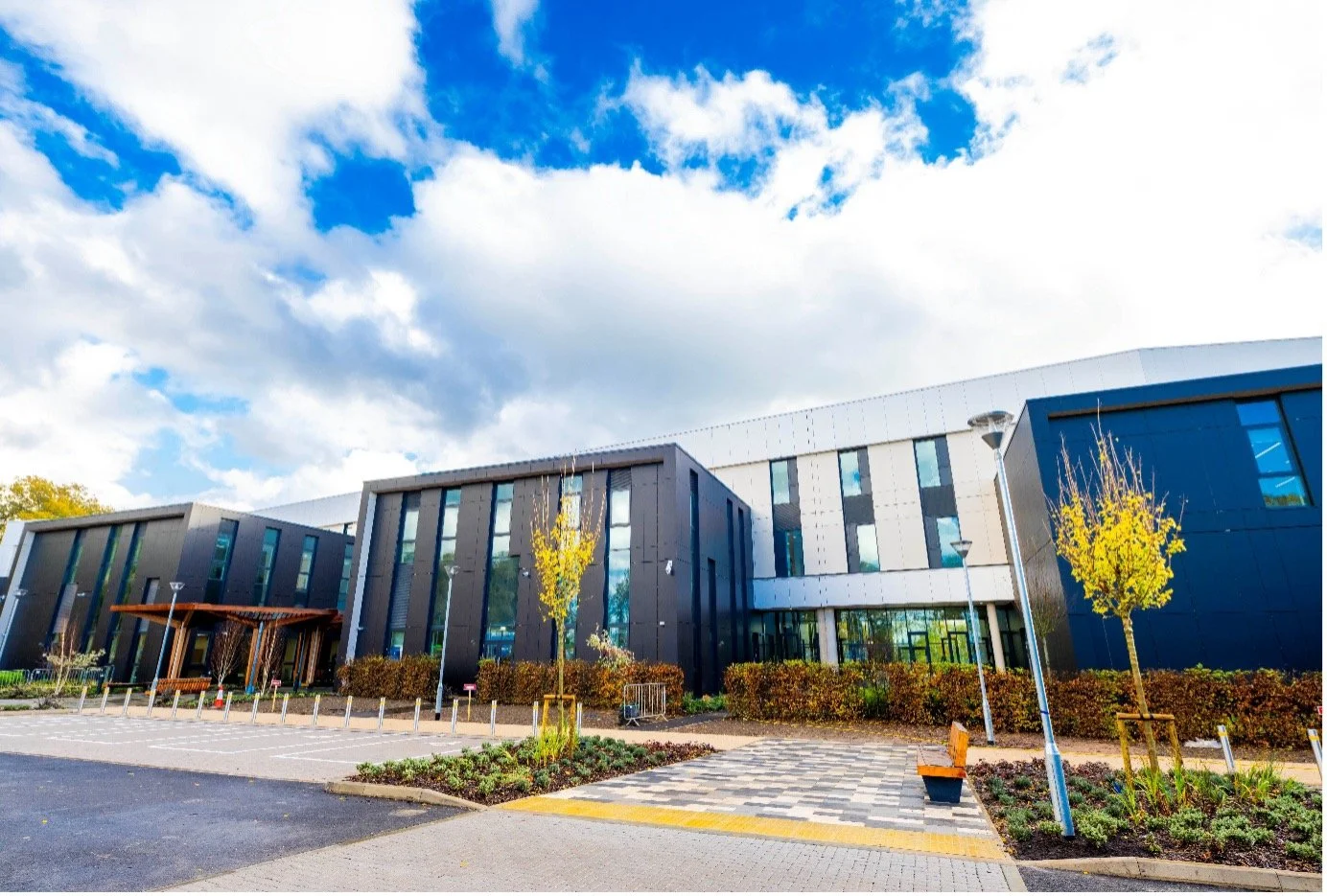
It’s peaceful on the grounds of Stanford Hall Rehabilitation Estate in Stanford on Soar, a rural village on the outskirts of Loughborough. In fact, it’s clear to see why this location has been chosen to become England’s first NHS national hub for rehabilitating patients with life-changing illnesses and injuries.
In 2023, Nottingham University Hospitals NHS Trust was granted £105 million by the New Hospital Programme to build the National Rehabilitation Centre (NRC) on the estate’s grounds, where it could be co-located with the existing Defence Medical Rehabilitation Centre (DMRC).Building the NRC has been a big undertaking. The Trust has had to kick into motion everything that comes with setting up a new hospital from quite literally the ground up: construction, connectivity, tech deployment, rehab equipment, training new staff, transferring patients, managing logistics… even filing for a new postcode.
However, it all started small when it came to smart technology, and for good reason.
So, where do you start with a smart hospital project of this size?
There’s a lot to get stuck into when you embark on a smart hospital project of the NRC’s size. Silent nurse calls, wayfinding, AI-driven CCTV, medical equipment tracking all make for promising use cases, and as it's such a rarity, people often can’t wait to get hands-on.
However, even the most advanced projects should never navigate away from the basics: planning, testing, and partnership.
Nottingham University Hospitals NHS Trust, alongside Cisco and the Lister Alliance, created a plan for procuring fit-for-purpose smart technology as well as its integration into a secure network.
Block (a Lister Alliance partner) became the project’s network integrator, as we’d worked with the Trust for nearly a decade. Essentially, our teams created the connectivity for the NRC that allowed for all the smart technologies to sit in a secure eco-system, where data can easily flow and produce fast results for patient care.
Co-designing with clinical
Co-design has been crucial to the NRC’s success. Of course, there’s so much that tech can do for healthcare, but many will have experienced IT-driven tech purchases that end up with only 10% of their functionality in use. Or even worse, it’s been abandoned completely and now collecting dust in a hospital storage cupboard. It’s these scenarios that cause cynicism among clinical staff.
We had to make sure the investment in the NRC didn’t meet the same fate. So, the Trust’s digital teams embedded clinical and non-technical staff within the project from the very beginning – giving the Lister Alliance, Block, and fellow partners the chance to work closely with those operating on the ground.
We did this at Linden Lodge, a smaller existing rehabilitation centre on another of the Trust’s sites. Here, clinical staff began to test out technologies such as Ascom Smart Nurse, UMA, Purple Transform and Kontakt.io by using it in their day-to-day care. Their feedback then fed into co-creation, so we could make sure tech was fit for purpose and staff were on board ahead of the NRC opening to patients.
This secured a few success factors:
· Established a business case for scaling: Academic partners used data from the smart technology to realise the benefits for the Trust. We could see what technology was making a drastic difference to patient care, and what might be an unjustifiable investment. The NRC were then able to invest in proven use cases confidently.
· Identified where technology needed modifying for the NRC: Clinical staff were able to pinpoint where changes could be made to piloted technologies while using them. Staff then fed back to tech partners and digital teams who were able to make these changes at a technical level.
· Win clinical buy-in: Clinical staff felt they were being heard and their needs prioritised during the co-design workshops. The Lister Alliance and Block also contributed to bespoke training sessions to make sure that introducing more tech into rehabilitation didn’t widen the gap between technical and non-technical staff.
What the pilot told us
The co-design and pilot initiatives at Linden Lodge gave us a really clear idea of what would work for the NRC (and what wouldn’t), uncovering various ways these technologies could be used.
For example, the Ascom Smart Nurse call system, which allows patients to quietly contact on-duty nurses, was used 30,472 times during six months. The data recorded popular call times, wait times, and what the purpose of the call was. The Trust can use this information to see where staff are best located for reduced wait times and where calls could be triaged to other teams, such as portering and catering.
Smart visibility of patient rooms combined with AI-driven CCTV showed a decrease in patient falls, improved response times to falls, and reduced abscond risks among vulnerable patients.
Real-time equipment tracking using Kontakt.io was estimated to save at least one hour of paid shift time per staff member. While a two-way nurse call system indicated it could save an average of 15-120 minutes per staff member, per shift.
The data confirmed what smart technology the NRC needed to truly enhance patient and staff experiences in a way that aligned with the goals of the New Hospital Programme and the NHS’ 10 Year Plan.
From this, Block were able to design and build network architecture for the NRC that could support all the chosen smart technologies across the building with reliable and secure connectivity. This was important because smart technology is redundant if the data cannot flow and hospitals can reap the advantages of its insight.
What’s happened to the National Rehabilitation Centre now?
The smart technology trialled at Linden Lodge was scaled to the design of the National Rehabilitation Centre. The hospital is now in its final stages and preparing to open its doors to patients.
For the purpose of this blog, I’ve focused on co-designing smart technology deployment. But the truth is, this technology should fade into the background when put into practice. And that’s how we want it to be.
The technology should be seamless so that patients can focus on recovering and returning to their lives, rather than being held back by slow or frustrating connectivity and hardware issues.
Co-design allowed us all to work in partnership while placing people at the heart when creating the NRC. And while technology may be a big enabler of this new smart hospital, it has helped us place people at the heart of future care too.
That’s something to get excited about – not just for the NRC patients and staff – but for the future smart hospitals that are yet to lay their first brick.
The NRC was a big project for the Lister Alliance and Block. You can read the full details of what we did and what it achieved here.